
The Great Discontinuation
Guest of Reality by Pär Lagerkvist.

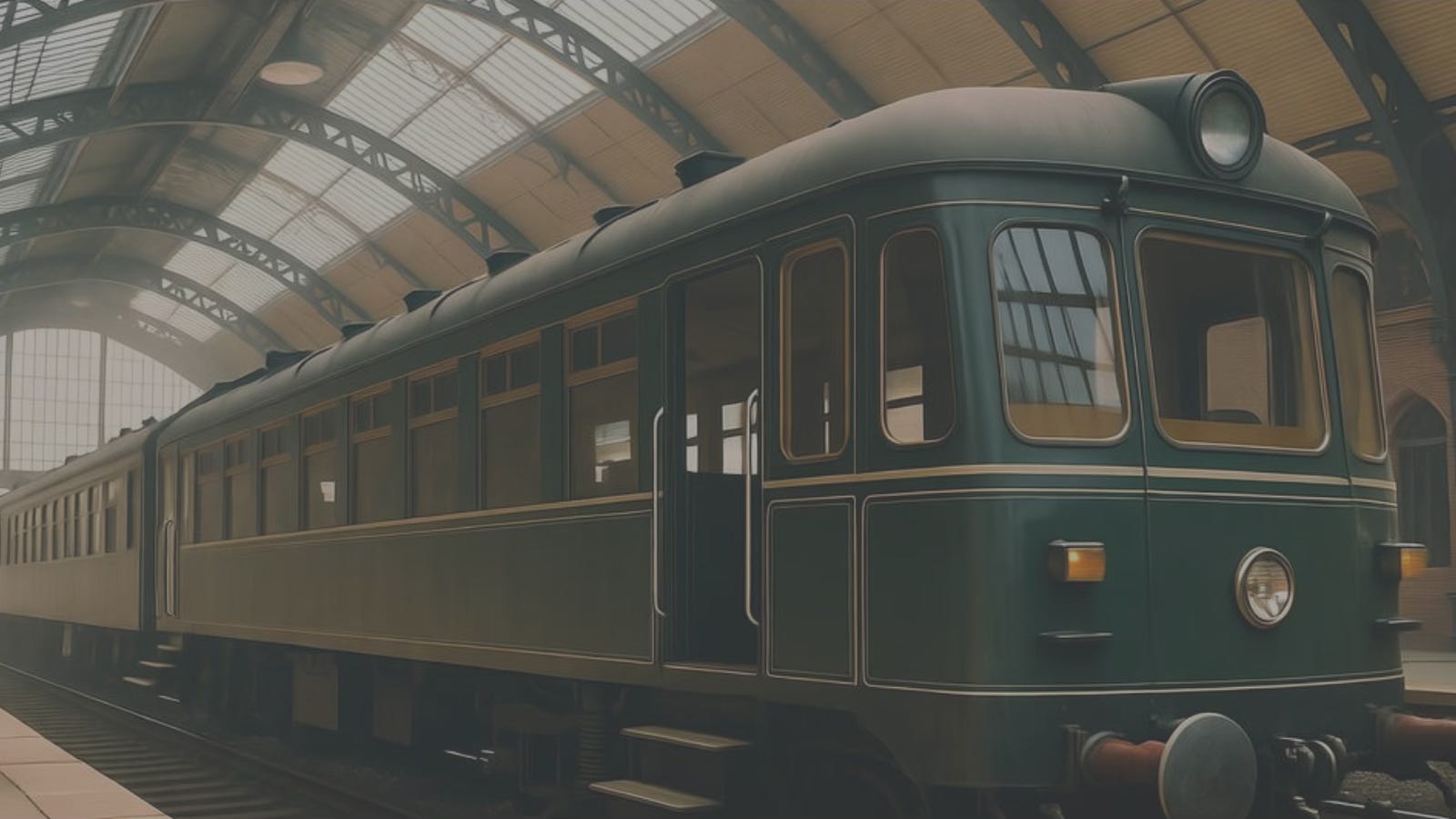
Småland is, in my opinion, the most Swedish region of Sweden (although, the folks from Dalarna, Värmland or Östergötland may beg to differ). Dark blue lakes, dense green forests, and misty meadows with the vanishingly rare linnea make up the landscape. If you come to visit, you will not miss the classic red cottages across the hilly terrain in this Swedish take on the Bible belt.
It is common knowledge that the soil of Småland is notoriously hard to cultivate due to its hopelessly stony composition, and it is said that this gave rise to the frugal, entrepreneurial, and down-to-earth character of the smålänningar. Yet this very soil may in fact be fertile in other ways, as it has nurtured notorious figures like biologist Carl von Linné and literary luminaries such as Vilhelm Moberg, Astrid Lindgren, and Pär Lagerkvist. It is the latter that I intend to write about today, since I recently rediscovered his book Guest of Reality (Gäst host verkligheten).
Born in Växjö into a religious family, Lagerkvist received the Nobel prize of literature in 1951. Guest of Reality is an autobiographical work in which the little boy Anders, in the interwar period, watches the trains go by and the people at the station change at a dizzying speed. On an emotional level, Guest of Reality is a depiction of an anxiously ruminating boy who is growing up. Anders struggles with fears of dispossession and death, and Christianity grants insufficient consolation in this time of rapid change. Through Anders, Lagerkvist makes us feel like we are witnessing a disintegrating society.
Visiting Småland just a few weeks ago, I am struck by how things have changed so rapidly. In some regards, it feels almost unrecognizable from when I lived there over a decade ago. Växjö station has completely changed, bulldozed by the architecture of modernity. But also the people have changed.
What would Lagerkvist have said of our times, had he lived today? Our times seem to best be described as The Great Discontinuation. For if we take an honest look at our society, what really connects us to the past? Modernity bears little resemblance to what our society was like just yesterday. At most, if we are truly lucky, we may find that some of the buildings of the past are still intact.
Our roots have been severed and our ancestry denied. When I walk around my old hometown, I realize that there is almost nothing anchoring us to the past as we speed into the future.
It is not just the events that have changed, like it was back then for little Anders. It is also the people that have changed.
Through our very DNA, now living Swedes are a mosaic of the past generations whose toil lifted Sweden from poverty to prosperity. What happens when Swedes no longer make up the vast majority of a country? Can you stitch together a severed nation with a kulturkanon?
Just like Lagerkvist in his younger years, I sometimes feel like I am walking through the valley of death. Perhaps I should embrace the Godless emptiness to cope with my anxieties, just like Lagerkvist did. In this era of disconnection, I cannot find comfort when I am looking around. The only thing that I can say is that I find a flicker of warmth in works like Guest of Reality.
Upplever ibland samma känsla när jag kommer hem till Småland. Mycket är annorlunda.
Ironiskt nog är det just i Stockholm som mycket är sig likt sedan generationer före oss. Den mest progressiva delen av landet har, trots allt, varit bäst på att INTE riva ner alla de vackra husen som stått där i över ett sekel, och på att segregera migranter till förorterna.
Thanks for a very thoughtful write-up.