
A Better Life - At Whose Expense?
A Better Life by Lionel Shriver.

Although I don’t particularly consider myself a competitive person, I must admit that I’ve felt a thorn in my ego as I watched review after review of Lionel Shriver’s latest novel, A Better Life, appear while I was busy with the chores of family life. I simply didn’t have time to write mine before now, so I’m a bit late to the party — even though I thought I would be faster. Instead, I enviously watched others publish their thoughts before me. (You should take that as encouragement to read the book — I’m clearly not alone in recognizing Shriver’s genius.)
Shriver is an author who always has her finger on the zeitgeist, and she does it in an entertaining but politically incorrect way. This time, she raises one of the most pressing questions of our era: What about the effects of mass immigration on the native population?
We almost always hear the migrants’ stories — their hardships and their search for “a better life.” Rarely do we hear from the other side: the host population that pays for everything, while losing their civilizational inheritance.
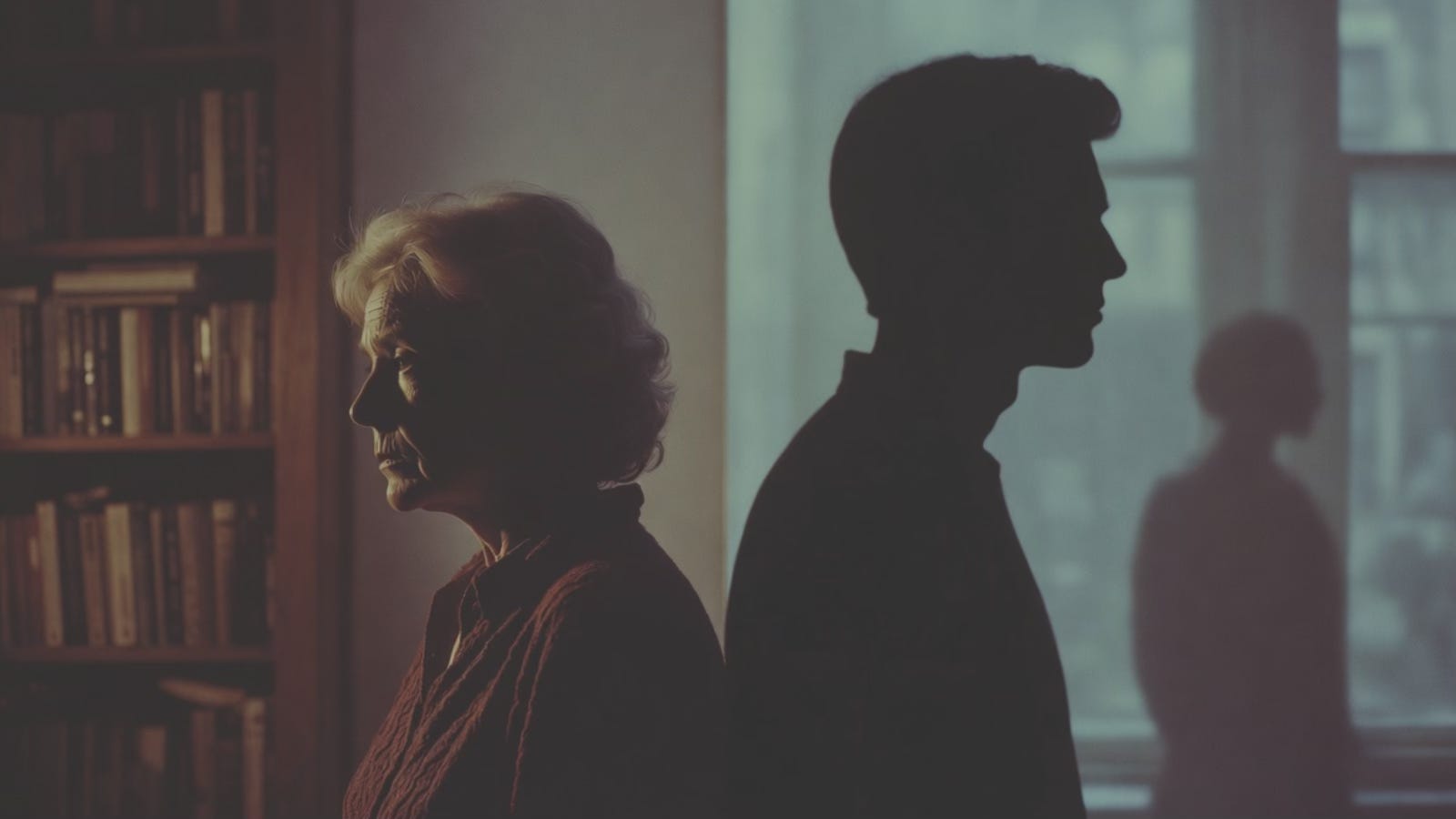
The novel centers on a fractured New York family. Gloria, a hopelessly progressive mother, signs up for a city program that connects families with asylum seekers in need of shelter and ends up taking in Martine, a Honduran migrant. Living with them is Gloria’s 20-something son Nico — unemployed, living off his mother’s money, watching far-right commentary on the Internet all day, and seemingly having given up on any real ambition in life.
Martine, the migrant, does everything “right” — she is helpful, grateful, and hardworking. And still, she ends up bringing into the family the very problems that she supposedly fled from her homeland. The image of the innocent asylum seeker crumbles with every page.
Here Shriver creates an awkward yet revealing conflict. Nico is strongly against immigration. He sees the migrants flooding New York as stealing resources from American taxpayers. Yet he himself is doing exactly the same thing to his own mother — freeloading without contributing one iota.
This personal hypocrisy cuts to the heart of something much larger about immigration itself. A country is not merely a land of opportunity. It is something you inherit — a possession built by generations before you. Through both legal and illegal immigration, Shriver shows how newcomers can claim, in an unfair way, a civilization that was not intended for them.
And, as the French philosopher Renaud Camus has observed, their very presence in large numbers begins to abolish the very thing they came seeking. If the numbers are high enough, the newcomers’ presence eventually erases the stability, trust, and prosperity that drew them in the first place. You could liken it to stealing another person’s insurance: it requires a certain audacity to just walk in and grab benefits you never paid into.
This is exactly what the Bonaventuras experience when they take in a migrant.
Anyone interested in the issue of immigration should really read A Better Life. The novel is entertaining, ideologically interesting, offers surprising personal intrigues — and gets to the sharpest points of the main problem facing the West today (immigration, that is).
Some spicy quotes from the book that I’ll leave you with:
“Much less did he propose that maybe the babies in those hotel lines were most deserving of hostility, because it was with babies more than bazookas that you enduringly appropriated someone else’s territory.”
“Like most impoverished refugees fleeing political persecution, Domingo had an Apple MacBook Pro.”
“Truth is, the whole asylum system should be shit-canned. It was designed for a handful of legitimate World War Two–type refugees, not several billion job seekers and welfare shoppers in an age of cheap transportation and smartphones.”
“You could plausibly argue that the descendants of the Africans who were dragged here against their will have still not fully assimilated into the United States a hundred and fifty years after emancipation.”
“No less so than if the Nazis had billeted in their farmhouse in France, the Bonaventuras were under occupation.”